

January Is Stalking Awareness Month
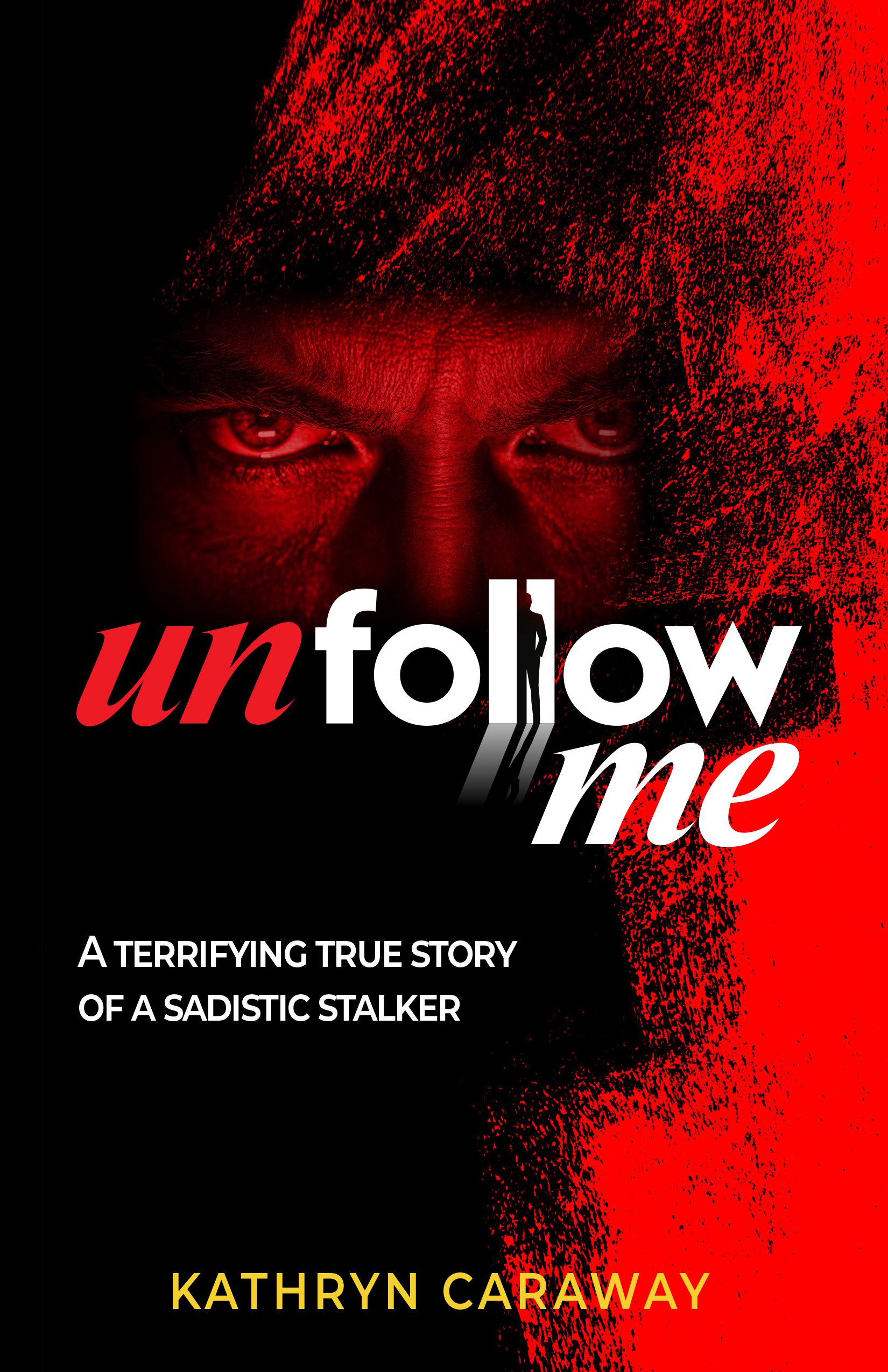
Unfollow Me: A Terrifying True Story of a Sadistic Stalker by award-winning Author Kathryn Caraway

Kathryn Caraway, International Award-Winning Author

After Dark Ink Publishing Co. Logo
Author Kathryn Caraway Uses Her Story to Shine a Light on a Misunderstood Crime
Technology has become one of the most powerful tools available to stalkers, allowing them to monitor, track, and intimidate victims with unprecedented ease. Seemingly harmless social media posts can expose sensitive information; for example, photos often contain embedded EXIF (Exchangeable Image File Format) data that can reveal precise GPS coordinates. In the hands of a stalker, these digital breadcrumbs can be used to map a victim’s movements, confirm routines, and lead to unwanted surveillance—often without the victim realizing how much they’ve revealed.
Amazon #1 bestselling author Kathryn Caraway stands out as both a victim of stalking and one of the few who achieved a conviction, placing her experience among the estimated 0.1% of cases that lead to legal accountability.
Stalking affects an estimated 13.5 million people each year (Smith, Sharon G. and Basile, Kathleen C. and Kresnow, Marcie-jo “The National Intimate Partner and Sexual Violence Survey : 2016/2017 Report on Stalking — updated release” (2022)), yet misconceptions and minimization often leave victims isolated and unheard. Caraway knows this reality firsthand. Her lived experience with stalking, combined with research on the subject, has positioned her as a respected subject matter expert on stalking behavior, victim impact, and the long-term psychological consequences of this obsession-driven crime.
“Cultural romanticization and minimization of stalking have normalized the behavior, causing it to go unrecognized as a crime until it becomes dangerous,” says Caraway.
Caraway is the author of Unfollow Me, a true crime account of a sadistic stalker that exposes how stalking escalates, how victims are often dismissed, and how cultural normalization of the crime delays intervention. Her case, while legally successful, underscores the limits of the system: the conviction carried only a six-month sentence, and in the state where the crime occurred, stalking is only a misdemeanor.
Stalking laws and penalties vary by state, but at their core, stalking is generally defined as a pattern of behavior that would cause a reasonable person to feel fear.
“Stalking is not about flattery or persistence—it’s about power, control, and fear,” says Caraway. “January is an opportunity to confront the myths, listen to those that have experienced it, and take this crime seriously before it escalates into violence or death.”
As lawmakers, courts, and the public grapple with where free speech ends and criminal threat begins—particularly following the U.S. Supreme Court’s 2023 decision in Counterman v. Colorado, which raised the burden of proof for prosecuting stalking—Caraway offers a rare perspective that bridges lived experience and true crime storytelling. She speaks to how stalking is routinely minimized, romanticized, or dismissed, and why victims are increasingly required to clear an alarmingly high evidentiary bar to be believed.
In Counterman v. Colorado (2023), the U.S. Supreme Court significantly raised the legal threshold for what constitutes a prosecutable threat. The case involved Billy Raymond Counterman, who was convicted in Colorado of stalking musician Coles Whalen after sending her hundreds of unsolicited social media messages over a two-year period. Whalen never responded and repeatedly blocked Counterman, yet he created new accounts to continue contacting her. Some messages suggested surveillance, referencing her car and personal movements, while others escalated into explicit hostility, including statements such as, “Staying in cyber life is going to kill you,” and, “You’re not being good for human relations. Die.”
The impact was severe: Whalen hired additional security and canceled performances. Although Counterman was convicted and sentenced to four and a half years in prison, the Supreme Court vacated the ruling on June 27, 2023, and remanded the case, requiring prosecutors to prove that Counterman was subjectively aware his statements could be interpreted as threats.
This decision set an alarmingly high bar, increasing the burden on victims to demonstrate fear-inducing intent and further narrowing the path to accountability in stalking cases.
As Stalking Awareness Month unfolds, Caraway encourages media outlets, advocacy organizations, and communities to elevate voices of the stalked and push for meaningful conversations around accountability and prevention.
During Stalking Awareness Month, Caraway is available for interviews and expert commentary on stalking behaviors, escalation warning signs, legal blind spots, and the long-term psychological toll on victims—bringing urgency and clarity to a crime that remains widely misunderstood and underreported.
Through interviews and media commentary, Caraway provides insight into:
• Strategies for victims of stalking based on her own experience
• The long-term psychological toll stalking takes on victims and ways to address this
• Why stalking is frequently misunderstood or dismissed
Unfollow Me is available on Amazon and continues to resonate with readers drawn to true crime that goes beyond shock value to explore real-world consequences.
About Kathryn Caraway
Kathryn Caraway is the Amazon #1 bestselling author of Unfollow Me, and founder of The Unfollow Me Project. She writes and speaks about stalking, victim advocacy, and the lasting psychological impact of stalking. Her work bridges true crime storytelling with education and awareness, challenging cultural myths surrounding stalking.
Meredith Bedford
After Dark Ink Publishing Co.
+1 919-913-5500
meredith@adink.com
Visit us on social media:
TikTok
Legal Disclaimer:
EIN Presswire provides this news content "as is" without warranty of any kind. We do not accept any responsibility or liability for the accuracy, content, images, videos, licenses, completeness, legality, or reliability of the information contained in this article. If you have any complaints or copyright issues related to this article, kindly contact the author above.
